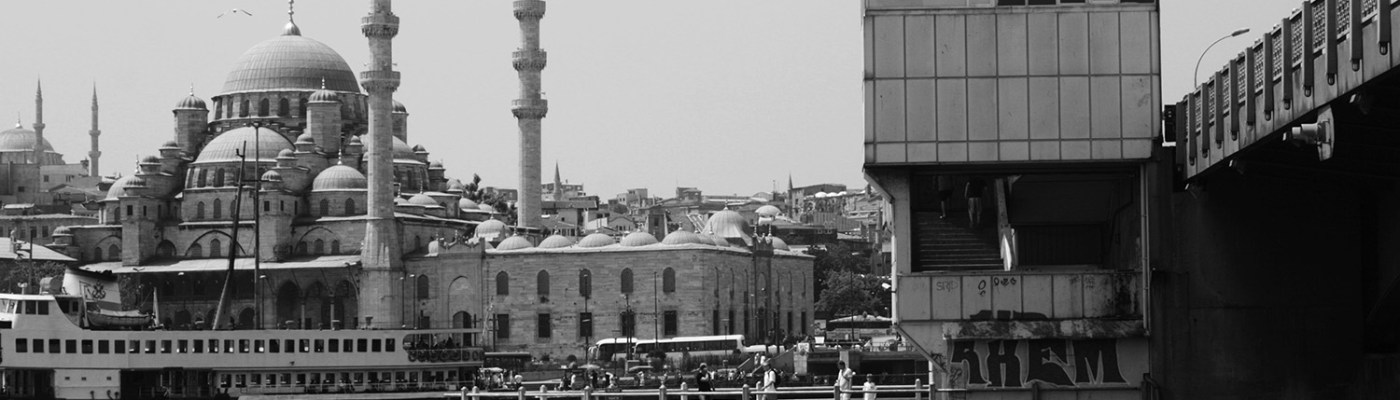
It’s impossible to account for the culture of a place in a few short days and in a few photographs and paragraphs. But perhaps I can give you a glimpse through my point of view.
First, as a disclaimer, I love Istanbul, so my point of view will be colored by my affection for the place. The city is vibrant, cosmopolitan, ancient and modern. Plus it’s surrounded by two seas, so what’s not to love.
But culture is messy, so in this account I’ll attempt to not gloss over the contradictions of place.
So, a quick and dirty cultural geography:
1) Religion
This is a space that is dominated by Islam in tension with secularism. As Stephen Kinzer penned (in a book that I’m about to start reading), Turkey, and Istanbul, is caught between the crescent of Islam and the star of secular democracy. This creates an incredible diversity of place. It creates tension. It creates contradiction. It influences space— nightclubs nestled against mosques. It influences fashion, particularly women’s fashion —an array of women in short skirts scurrying next to women in traditional garb (with many fashion points along this spectrum). At some point, some of us can get in a conversation about feminism and the hijab, but we haven’t the time here. To give a quick hint of my feminist sensibilities, however, I admit that it is frustrating to see men run about in whatever clothes they want and some women feeling compelled to dress from head to toe. It’s hot here, and those gendered ideas about the human body have practical consequences (not to mention ideological ones). Here is where cultural relativism and ideological commitments collide, I admit, but let’s move on.
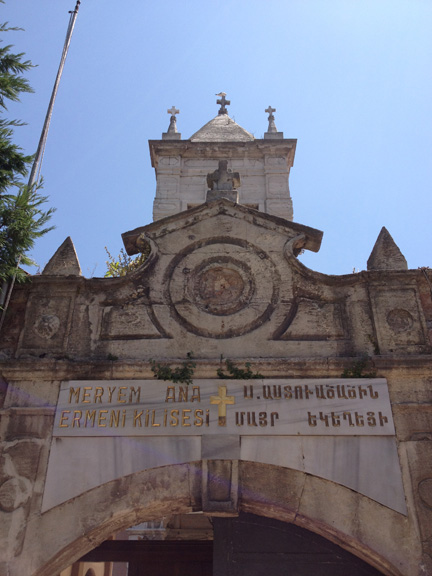
And it’s not just Islam here. You’ve seen images of mosques, but Istanbul is also the cradle of institutionalized Christianity (Constantine around 300 AD, I believe). Islam is clearly the dominant religion here today, but there are still pockets of Christianity. We stumbled by an Armenian orthodox school two days ago, and yesterday we toured a Greek (and other national expressions) Orthodox monastery turned boys school. Here’s a pic.
2) Ancient and modern
I kick around this duality quite a bit in my work, particularly how modern folks desire “the ancient,” but Istanbul is a city that fully embraces the contradictions of old and new— from its street structure to its religion and government to its food. You can find evidence of 21st century globalization (Starbucks, McDonald’s, fashion, etc.) and 2nd century (and earlier) cultural flows. In a word: fascinating.
For example, we traveled out to Prince’s Island yesterday—a place that fuses modern, global culture with centuries old architecture and transportation. Automobiles are generally banned (except for city services). Horse, foot and the modern mode of the bicycle are the ways of getting around.
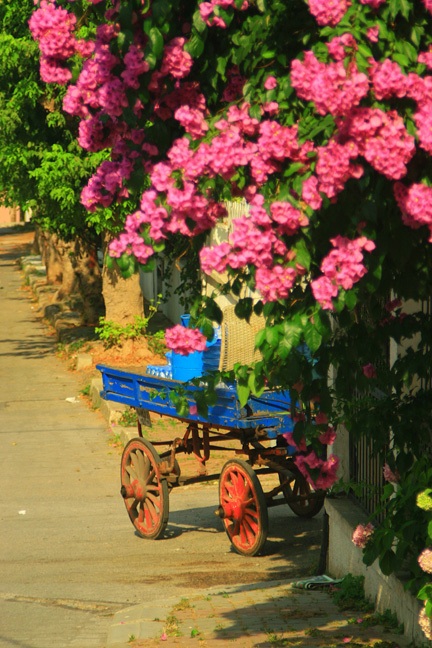
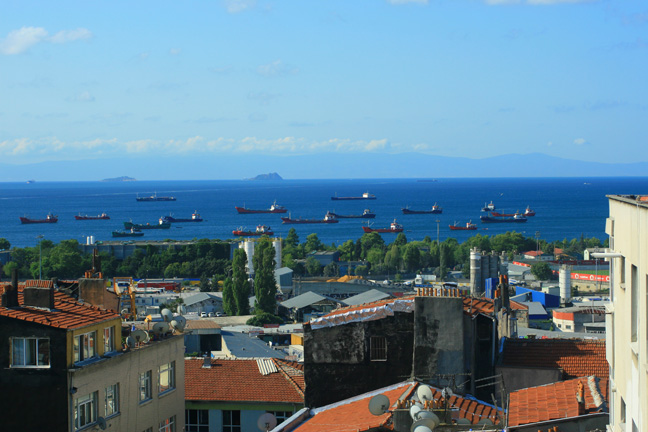
This older way of being stands in stark contrast to the modern Istanbul—a sprawling cityscape of skyscrapers and ship ports.

3) People
We have had the most gracious hosts in Istanbul. Gracious and hospitable. Our guides have given so much of their time, and we’ve had countless expressions of Turkish hospitality on this trip. The people here are remarkably diverse, no surprise in a city of 15 million. My glimpse here is so fleeting because I don’t speak the language, which is unfortunate. So I offer two pictures of personal exchange. The first of two people chatting on the street. The second of the people on the ferry who found such joy in throwing bread to the sea gulls. Simple pleasures express so much about a culture, no?
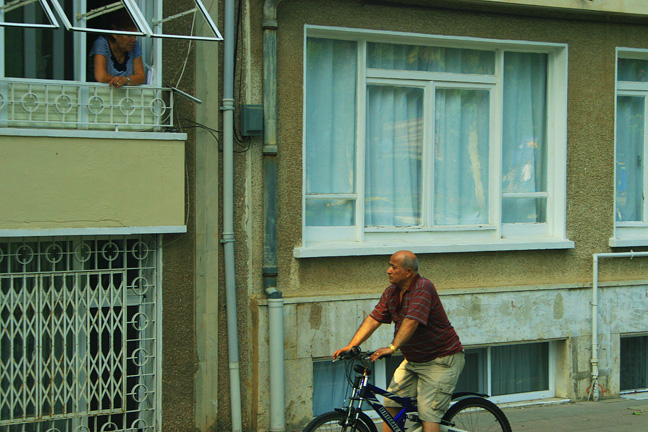
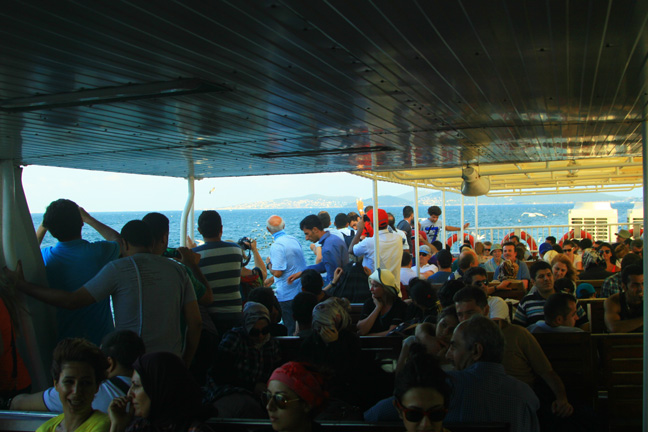
I don’t want to romanticize people. Of course, there is tension. Of course, there is discord. Of course, there are problems. The guy in the first picture could have been fighting with the woman above over property rights for all I know. We learned at the conference that (very generally speaking — meta analysis of national surveys) Turkish folks would rather not live by gay people, people who consume alcohol, atheists, Jews, or Christians. So culture is as much about conflict as it is about anything else. But these two glimpses, I like to think, are glimpses of people enjoying one another. Culture is about that also.
4) Trash and graffiti.
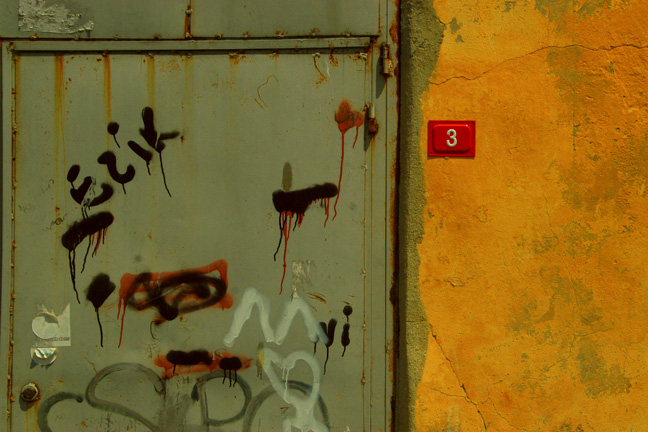
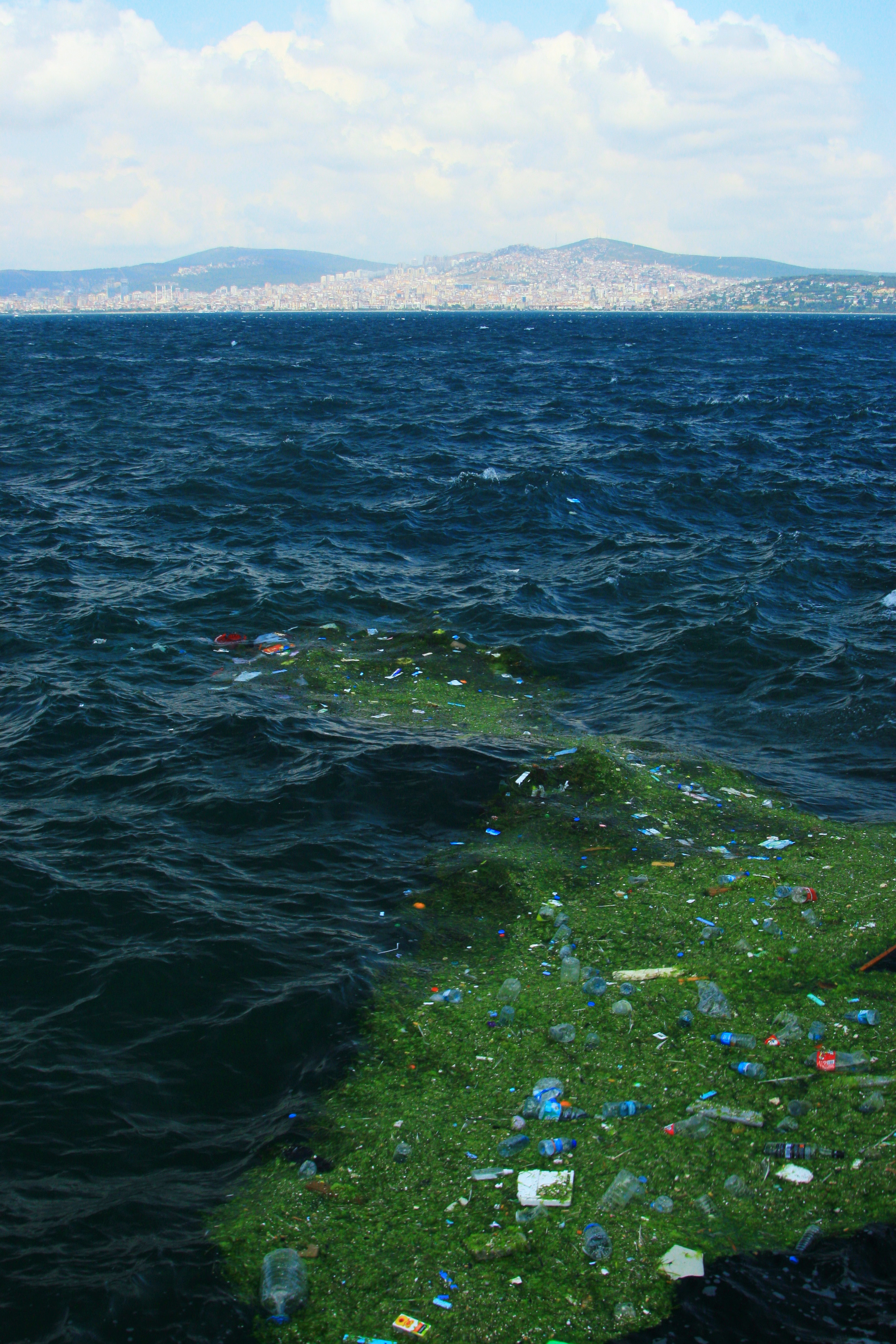
You can learn a lot about culture from its trash and graffiti, so my archaeologist friends tell me. I like taking photos of graffiti and trash, mainly to capture discord and rebellion within culture and to jam the “tourist guide” photographic expectations of place. So, first some graffiti (tagging) and then some trash. Of the latter, imagine the standard guide book cityscape photo. Certainly, that image would crop out the trash. But we can’t avoid trash, so why avoid images of it? It is an essential part of consumption, and trash hints at so many issues related to cultural norms, politics, global flows of people and products, even religion.
5) food
I imagine that most people reading this blog know I love food. I love to prepare it. I love to think about it. I love to consume it. Food, in many ways, is why I travel. (That and coffee). It is the sense experience that seems most “real” to me, the one that is least mediated by the tourist industry. This is not to say that food taste is not cultural or constructed. Quite the contrary. But in an industry and experience so dominated by sight (see, The Tourist Gaze 3.0), taste and smell seem to be the senses that best escape the constructed tourist desire. Flavor and digestion often rebel against tourist expectation and desire. Just ask Heather about the delicacy of turnip juice (Terrible!). Or sardines (eh). Or calamari and cheese (yum!) . Or spicy kebabs (yum! yum!). Or soup made of lamb head (saw it, but haven’t tried it). Food is a taste (not a glimpse) into the past and present. It is a wonderful expression of culture. I love food, and I love the food in Turkey (minus the turnip juice and, honestly, the NesCafe).
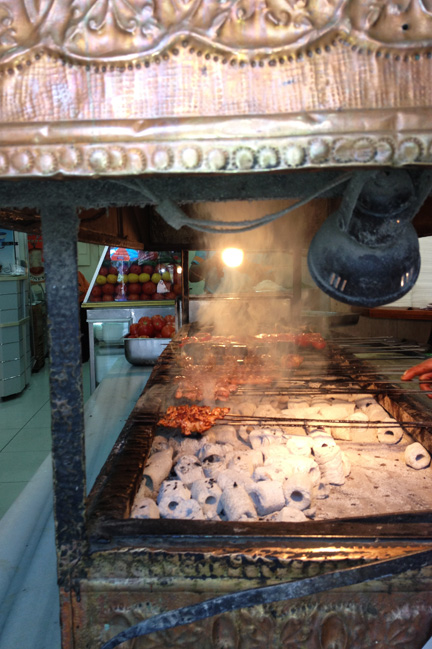
There you have it — the quick cultural geography of Istanbul as I’ve experienced it. You should come experience this place. I’m just sayin’.
 Curtis D. Coats